Even out the background
Reduce uneven sky brightness so the glow of a nebula or the shape of a galaxy is easier to see.
Inside Skymla.
For smart-telescope owners who enjoy taking the photos and want an easier next step. Open your images, bring out the detail and make them your own.
01 / Get started
Bring in the individual exposures you saved from your telescope or camera. Skymla helps you review them and combine them into one image, ready to adjust.
If you have calibration frames, you can use those too. They help correct uneven illumination and patterns from the camera sensor.
A stack is an image made by combining several exposures. If you already have an unprocessed TIFF stack, open it and go straight to adjusting the result.
There’s no need to repeat the stacking step. Start with the image you have and take it a little further.
02 / Combine, if you need to
One exposure only catches so much. Combining a set can give you a cleaner starting point and help faint details stand out.
03 / Adjust & save
An unprocessed stack can look surprisingly dark. There’s often more in it than you can see at first. Skymla helps you reveal that detail and find a balance you like.
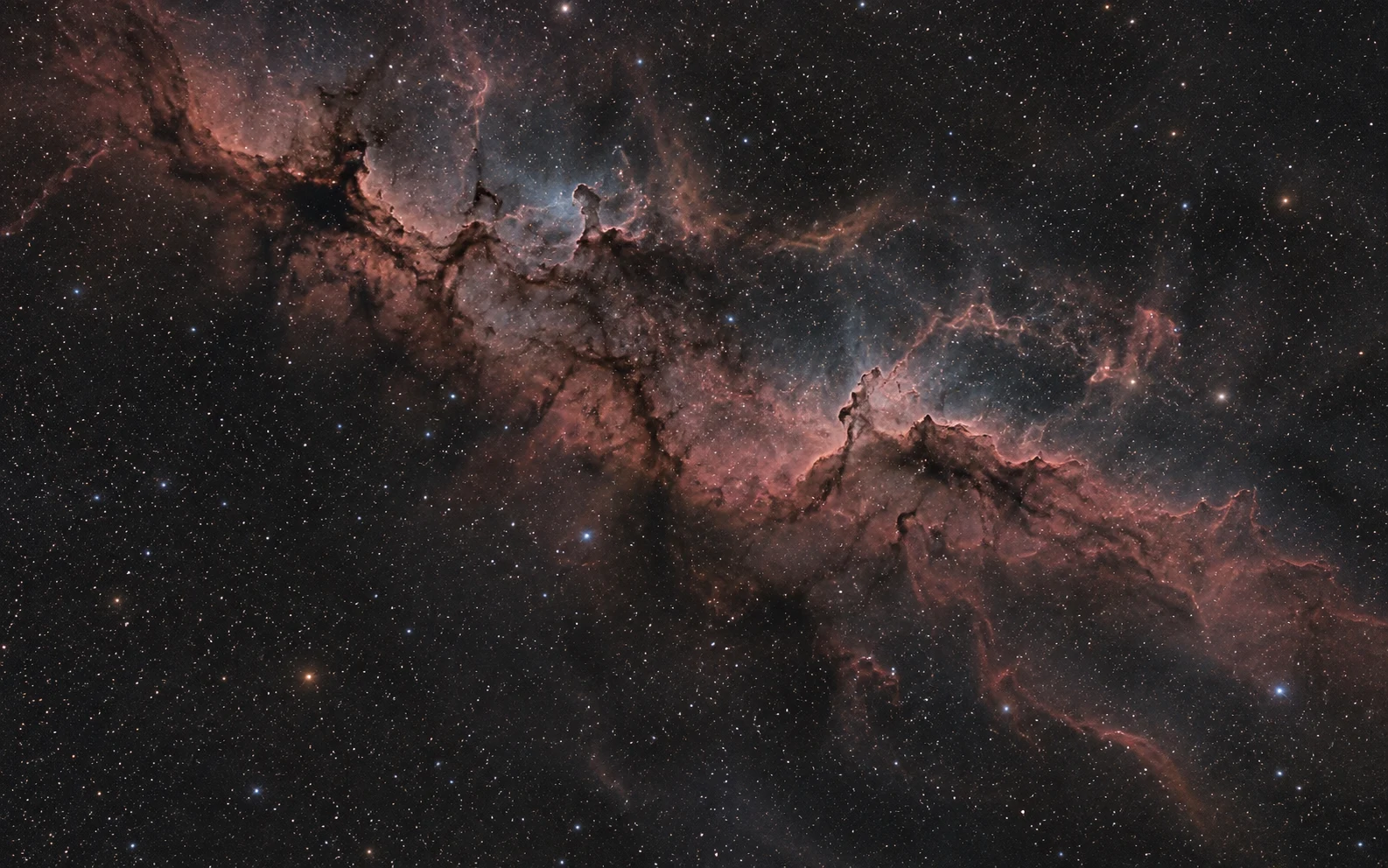
Reduce uneven sky brightness so the glow of a nebula or the shape of a galaxy is easier to see.
Balance the colour in your image, then fine-tune it to taste. See the whole photo as you adjust.
Make the dim parts of your image more visible while keeping an eye on the bright stars. In astro photography, this step is called stretching.
Save your adjustments with the image and return to them later. Try a quieter background or a different colour balance as your eye develops.
Export a finished TIFF to keep, print or prepare for sharing in your usual photo app. Your original stack stays available for another edit.
A few practical details.
Smart-telescope owners are at the heart of Skymla. The focus is a straightforward route from the images you capture to a finished photo on your Mac.
Stack camera RAW files supported by macOS, TIFFs, or two-dimensional FITS images in the primary HDU. RGB FITS cubes are not currently supported. To begin with an existing stack, open an unprocessed TIFF.
Keep a floating-point master and export a finished TIFF. Layered PSD export is available when using star separation.
Skymla works with StarXTerminator, NoiseXTerminator, BlurXTerminator, StarNet2 and DeepSNR. These require separate installation and their respective licences.
With a star-removal tool installed, you can adjust the stars and the rest of the image separately, then bring them back together.
Currently in closed beta.
We’re refining Skymla with real imaging sessions. The public release is coming soon.
Back to the overview